In today's increasingly distributed work landscape, the concept of remote asynchronous collaboration has evolved from a niche practice to a fundamental operational necessity. Organizations worldwide are recognizing that the traditional model of real-time, co-located teamwork is no longer the only—or even the most effective—way to drive productivity and innovation. The shift towards async-first cultures represents a profound transformation in how we conceptualize work, communication, and ultimately, how we build and sustain successful teams across time zones and continents.
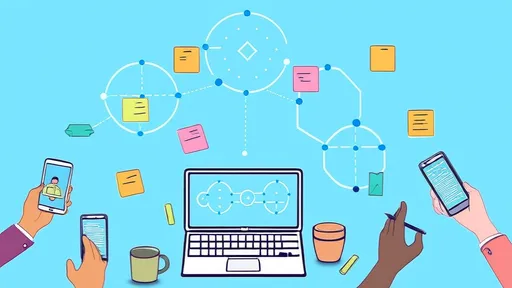
The foundation of effective asynchronous collaboration lies in the deliberate construction of a robust toolchain tailored to support non-linear workflows. At the heart of this ecosystem are communication platforms that prioritize clarity and context over immediacy. Tools like Slack and Microsoft Teams have become ubiquitous, but their async potential is only realized when teams move beyond treating them as virtual watercoolers and instead use them as structured repositories of decisions, updates, and insights. The magic happens when messages are composed not for instant reaction but for lasting reference, complete with necessary background and clear action items.
Documentation tools form another critical layer in the async stack. Platforms like Notion, Confluence, and Google Docs have transformed from simple word processors into dynamic knowledge bases where ideas are developed, refined, and preserved. The async advantage here is the ability to contribute thoughtfully without the pressure of real-time editing sessions. Team members can engage with content at their optimal working hours, leaving detailed comments and suggestions that often demonstrate greater depth than off-the-cuff verbal feedback. This creates a living record of the evolution of ideas that becomes invaluable for both current collaboration and onboarding new team members.
Project management tools like Asana, Trello, and Jira provide the structural framework that makes async collaboration actually work. They transform abstract discussions into concrete tasks with clear ownership and deadlines. The visual nature of these platforms creates transparency that transcends time zones—any team member can quickly understand project status without scheduling a meeting. This visibility is crucial for maintaining alignment and accountability when people aren't sharing the same physical space or working hours.
Perhaps the most underappreciated aspect of the async toolchain is the emergence of specialized tools that capture the nuances of human communication often lost in text. Loom and similar video messaging platforms allow team members to share complex ideas with tone and visual context that emails or chat messages might lack. These tools create a middle ground between the formality of documentation and the spontaneity of conversation, preserving the human element that remains essential to effective collaboration.
However, tools alone are insufficient without corresponding cultural shifts. The most sophisticated toolchain will fail if team members remain mentally anchored to synchronous expectations. Successful async cultures share common characteristics that distinguish them from traditional work environments. They prioritize written communication as the primary means of collaboration, recognizing that the act of writing forces clarity of thought that spoken conversation often avoids. This written-first approach creates an organizational memory that outlasts individual conversations and meetings.
Async-native organizations also develop new norms around response times and availability. The constant pressure of immediate responsiveness gives way to more respectful and realistic expectations about when replies should occur. This requires explicit discussion and agreement about what constitutes reasonable response times for different communication channels. The result is not slower collaboration but more thoughtful engagement, where team members have the cognitive space to develop better considered responses rather than reactive ones.
Meeting culture undergoes a radical transformation in truly async environments. Rather than defaulting to scheduled calls for every discussion, teams learn to evaluate whether a meeting is truly necessary or if the same outcome could be achieved through async means. When meetings do occur, they become more focused and productive because participants arrive having already digested background materials. The meeting itself becomes a place for decision-making rather than information sharing, dramatically increasing the value of the time spent together.
The human element of async work requires particular attention. Without the casual hallway conversations and spontaneous coffee breaks that build rapport in physical offices, remote teams must intentionally create opportunities for connection. This might include virtual social spaces, scheduled non-work interactions, or simply encouraging personal sharing within work channels. The most successful async organizations recognize that trust and camaraderie don't automatically emerge from task coordination—they require deliberate cultivation.
Measuring productivity in async environments demands new approaches as well. Traditional metrics focused on hours worked or visible activity become not just irrelevant but counterproductive. Instead, organizations must learn to evaluate outcomes rather than inputs, focusing on what is delivered rather than how or when the work happens. This results-oriented approach ultimately benefits both the organization and individual team members, who gain greater autonomy over their work patterns.
The transition to async collaboration isn't without challenges. It requires unlearning deeply ingrained habits about how work should be structured and measured. Some team members may struggle with the written communication emphasis or feel isolated without frequent real-time interaction. These challenges underscore that moving to async work isn't simply about implementing new tools—it's about thoughtfully redesigning work processes and cultural norms.
Looking forward, the evolution of async collaboration will likely be shaped by emerging technologies. Artificial intelligence promises to help summarize discussions, extract action items, and even predict potential misunderstandings in written communication. Virtual and augmented reality may eventually create new forms of presence that bridge the gap between async and synchronous interaction. However, the fundamental principles of clear communication, documented processes, and respect for individual work patterns will remain essential regardless of technological advances.
Organizations that master async collaboration gain significant competitive advantages. They access global talent pools without geographic constraints, create more inclusive environments for neurodiverse team members who may thrive in non-traditional work structures, and build resilience against disruptions that might paralyze office-centric companies. Perhaps most importantly, they unlock higher quality work by allowing people to contribute when they're at their best rather than when they're scheduled to be available.
The future of work isn't just remote—it's asynchronous. Companies that recognize this distinction and intentionally build both the toolchain and culture to support it will lead their industries in innovation, efficiency, and employee satisfaction. The transition requires investment and intentionality, but the returns in productivity, talent retention, and organizational resilience make it one of the most valuable transformations any modern organization can undertake.

By /Aug 26, 2025
By /Aug 26, 2025
By /Aug 26, 2025

By /Aug 26, 2025

By /Aug 26, 2025

By /Aug 26, 2025

By /Aug 26, 2025
By /Aug 26, 2025

By /Aug 26, 2025

By /Aug 26, 2025

By /Aug 26, 2025

By /Aug 26, 2025

By /Aug 26, 2025

By /Aug 26, 2025
By /Aug 26, 2025

By /Aug 26, 2025

By /Aug 26, 2025

By /Aug 26, 2025

By /Aug 26, 2025

By /Aug 26, 2025
