The Impact of Technological Innovation under the Disintegration of Large Tech Companies and Antitrust Regulations

Aug 26, 2025 By

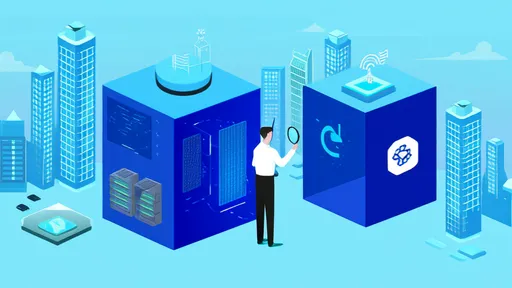
The global technology landscape is currently undergoing a profound transformation, driven by increasing regulatory scrutiny and a wave of antitrust actions aimed at the world's largest tech conglomerates. Central to this shift is the debate over whether breaking up these behemoths would spur innovation or inadvertently stifle it. As governments and regulatory bodies intensify their focus on market dominance and competitive practices, the potential fragmentation of giants like Google, Amazon, Facebook, and Apple raises critical questions about the future trajectory of technological advancement.

Historically, large technology firms have been celebrated as engines of innovation, leveraging their vast resources to fund ambitious research and development projects. These companies have pioneered breakthroughs in artificial intelligence, cloud computing, and consumer electronics, often integrating advancements across their diverse portfolios. The synergy between different divisions within these corporations has, in many cases, accelerated the pace of innovation, allowing for cross-pollination of ideas and technologies that might not have thrived in isolation.

However, this very integration has drawn the ire of regulators and competitors alike. Critics argue that the dominance of these firms creates an environment where smaller players struggle to compete, ultimately dampening the innovative spirit that characterizes a healthy market. The fear is that monopolistic practices—whether through predatory pricing, exclusive agreements, or the acquisition of potential rivals—suppress competition and reduce the incentive for groundbreaking discoveries. In this view, the breakup of tech giants could level the playing field, empowering startups and mid-sized firms to challenge incumbents and introduce disruptive technologies.

On the flip side, proponents of large, integrated tech companies caution that fragmentation could dismantle the very ecosystems that foster innovation. They point to the efficiencies gained from scale: the ability to invest billions in long-term, high-risk projects like quantum computing or autonomous vehicles, which might be too daunting for smaller entities. Moreover, the seamless integration of hardware, software, and services—exemplified by Apple's ecosystem or Amazon's retail and cloud infrastructure—often delivers superior user experiences and operational efficiencies that drive technological adoption and refinement.

The impact of antitrust actions on innovation is not merely theoretical; it is already unfolding in real time. In the United States, the Department of Justice and the Federal Trade Commission have launched landmark lawsuits targeting alleged anti-competitive behaviors, while the European Union has imposed hefty fines and mandated changes in business practices. These regulatory interventions are forcing tech giants to reconsider their strategies, potentially leading to voluntary divestitures or operational restructurings even before court-ordered breakups materialize.

Early indicators suggest that such pressures are having a mixed effect on innovation. In some cases, increased scrutiny has prompted companies to open up their platforms and APIs, fostering a more collaborative environment with third-party developers. This has led to a surge in innovation around niche applications and services that leverage the core technologies of these platforms. Conversely, the uncertainty surrounding potential breakups has caused some firms to become more cautious in their R&D investments, particularly in areas that require long-term commitment and substantial capital.

Looking ahead, the trajectory of technological innovation in a post-antitrust era will likely hinge on how these regulatory measures are implemented. A poorly executed breakup could fragment valuable intellectual property and disrupt collaborative research efforts, slowing down progress in critical fields. Conversely, well-designed interventions that promote competition without sacrificing the benefits of scale could unleash a new wave of creativity and entrepreneurship. The key will be striking a balance between curbing monopolistic excesses and preserving the collaborative, resource-rich environments that drive technological breakthroughs.

Ultimately, the relationship between antitrust actions and innovation is complex and multifaceted. While the intent of these measures is to foster a more dynamic and competitive market, their actual impact will depend on a myriad of factors, including the specific nature of the breakups, the resilience of the innovation ecosystems within these companies, and the ability of smaller firms to fill any voids left by fragmentation. As this saga continues to unfold, it will undoubtedly shape the technological landscape for decades to come, influencing everything from consumer products to foundational advances in science and engineering.

In conclusion, the ongoing antitrust efforts targeting large tech companies represent a pivotal moment in the history of technological innovation. The outcomes of these actions will not only determine the market structure of the tech industry but also set a precedent for how society balances the power of corporate giants with the need for competitive, innovative markets. As stakeholders—from policymakers to entrepreneurs—navigate this uncharted territory, the hope is that the result will be a more equitable and vibrant technological ecosystem that continues to push the boundaries of what is possible.

Recommend Posts
IT

Addressing Tech Burnout: Support Systems for Developer Well-being

By /Aug 26, 2025

In the relentless pace of the technology sector, a quiet crisis is unfolding behind the screens of developers worldwide. Tech burnout, a state of emotional, physical, and mental exhaustion caused by prolonged stress, has become an endemic challenge threatening both individual well-being and organizational health. It manifests not as a single dramatic event but as a gradual erosion of passion, creativity, and resilience, often leaving talented professionals feeling drained, cynical, and detached from the work they once loved.
IT

Technical Implementation Plan for Personal Data Sovereignty

By /Aug 26, 2025

In today's digitally interconnected world, the concept of data sovereignty has emerged as a critical focal point for individuals, corporations, and governments alike. At its core, data sovereignty refers to the idea that data is subject to the laws and governance structures of the nation where it is collected. However, as data flows seamlessly across borders through cloud services and global platforms, the ability of individuals to maintain control over their personal information has become increasingly challenging. This has spurred a growing demand for technological solutions that empower users to reclaim ownership and control of their digital identities and information.
IT

The Impact of Technological Innovation under the Disintegration of Large Tech Companies and Antitrust Regulations

By /Aug 26, 2025

The global technology landscape is currently undergoing a profound transformation, driven by increasing regulatory scrutiny and a wave of antitrust actions aimed at the world's largest tech conglomerates. Central to this shift is the debate over whether breaking up these behemoths would spur innovation or inadvertently stifle it. As governments and regulatory bodies intensify their focus on market dominance and competitive practices, the potential fragmentation of giants like Google, Amazon, Facebook, and Apple raises critical questions about the future trajectory of technological advancement.
IT

Technical Support and Compliance Challenges for Global Digital Nomads

By /Aug 26, 2025

The rise of digital nomadism represents one of the most significant shifts in the global workforce of the 21st century. Enabled by advancements in communication technology and a growing acceptance of remote work, this lifestyle allows professionals to work from anywhere in the world, untethered from a fixed office location. While the freedom and flexibility are undoubtedly appealing, this new mode of working brings with it a complex web of technical and legal challenges that both individuals and organizations must navigate. The infrastructure that supports a seamless digital work experience is often taken for granted until it fails, and the legal frameworks governing cross-border work are struggling to keep pace with this rapidly evolving trend.
IT

Agility vs. Scalability in Technology Stack Selection for Startups

By /Aug 26, 2025

In the fast-paced world of technology startups, the decisions made in the earliest days often cast long shadows over a company's future. Among these, perhaps none is more critical than the selection of a technology stack. This foundational choice, a blend of programming languages, frameworks, databases, and infrastructure tools, is frequently treated as a mere technical implementation detail. However, for a founder or a CTO, it is a profound strategic decision that sits at the precarious intersection of immediate agility and long-term scalability. Getting it right can provide a powerful tailwind for years to come; getting it wrong can saddle a growing company with debilitating technical debt, slowing innovation to a crawl just when it needs to move fastest.
IT

The Art of Technical Speaking and Evangelism

By /Aug 26, 2025

In the ever-evolving landscape of technology, the ability to communicate complex ideas with clarity and passion has become as crucial as innovation itself. The art of technical speaking and evangelism stands at the intersection of expertise and persuasion, where the goal is not merely to inform but to inspire, engage, and mobilize audiences. Unlike traditional presentations, which often focus solely on data and features, this discipline blends deep technical knowledge with storytelling, empathy, and strategic messaging to create lasting impact.
IT

Metrics and Case Studies for Tech for Good

By /Aug 26, 2025

In an era where technological advancement often outpaces ethical consideration, the concept of Tech for Good has emerged as a critical framework for evaluating how innovation serves humanity. This philosophy transcends mere functionality or profit, focusing instead on measurable positive impact across social, environmental, and economic dimensions. The movement challenges developers, investors, and policymakers to prioritize purpose alongside progress, ensuring that technology becomes a force for equitable and sustainable development rather than exacerbating existing inequalities.
IT

Building the Toolchain and Culture for Remote Asynchronous Collaboration

By /Aug 26, 2025

In today's increasingly distributed work landscape, the concept of remote asynchronous collaboration has evolved from a niche practice to a fundamental operational necessity. Organizations worldwide are recognizing that the traditional model of real-time, co-located teamwork is no longer the only—or even the most effective—way to drive productivity and innovation. The shift towards async-first cultures represents a profound transformation in how we conceptualize work, communication, and ultimately, how we build and sustain successful teams across time zones and continents.
IT

Cognitive Diversity in Technical Teams and Innovation Performance

By /Aug 26, 2025

In the rapidly evolving landscape of technology, the pursuit of innovation has become the cornerstone of competitive advantage. While technical expertise and cutting-edge tools are often highlighted as primary drivers of progress, there is a deeper, more nuanced element that fuels breakthrough thinking: cognitive diversity. This concept, which refers to the differences in problem-solving approaches, perspectives, and information-processing styles within a team, is increasingly recognized as a critical factor in driving innovation performance. Unlike demographic diversity, which focuses on visible traits, cognitive diversity taps into the invisible yet powerful variations in how people think, analyze, and create.
IT

Prompt Engineer Skills Framework and Career Prospects

By /Aug 26, 2025

In the rapidly evolving landscape of artificial intelligence, a new and pivotal role has emerged at the intersection of technology and linguistics: the Prompt Engineer. This professional is tasked with the intricate art and science of crafting the precise instructions, or prompts, that guide large language models and other generative AI systems to produce desired outputs. The role has swiftly moved from a niche specialization to a critical function within tech companies, research institutions, and any organization leveraging AI, highlighting its growing importance in harnessing the true potential of artificial intelligence.
IT

Design and Implementation Guidelines for a Digital Ethics Framework

By /Aug 26, 2025

The landscape of digital innovation continues to evolve at a breathtaking pace, bringing with it transformative potential alongside profound ethical questions. As organizations increasingly integrate advanced technologies like artificial intelligence, big data analytics, and automated decision-making systems into their core operations, the imperative to adopt a robust digital ethics framework has never been more critical. Such a framework is not merely a compliance checklist or a public relations exercise; it represents a fundamental commitment to responsible innovation, ensuring that technological progress aligns with human values, societal norms, and long-term sustainability.
IT

Technological Implementation and Ethical Considerations of Affective Computing"

By /Aug 26, 2025

Affective computing represents one of the most fascinating and ethically complex frontiers in modern technology. By integrating principles from computer science, psychology, and cognitive science, this field aims to develop systems capable of recognizing, interpreting, and responding to human emotions. The implications are profound, touching industries from healthcare to marketing, yet they come with significant ethical questions that society is only beginning to grapple with.
IT

Advancements in Quantum Machine Learning Algorithms and Experiments

By /Aug 26, 2025

Recent advancements in quantum machine learning have begun to reshape the computational landscape, merging the probabilistic nature of quantum mechanics with the data-driven paradigms of classical machine learning. The field, though still in its nascent stages, has witnessed a surge in both theoretical proposals and experimental validations, pushing the boundaries of what is computationally feasible. Researchers and tech giants alike are pouring resources into developing algorithms that leverage quantum superposition and entanglement to process information in ways that classical systems cannot emulate. This convergence promises not only exponential speedups for specific tasks but also novel approaches to understanding complex datasets.
IT

Paths to Enhancing the Precision of Non-Invasive Brain-Computer Interface Technologies

By /Aug 26, 2025

In recent years, the field of brain-computer interfaces (BCIs) has witnessed remarkable advancements, particularly in non-invasive technologies. These innovations are paving the way for more accessible and user-friendly applications, from assisting individuals with disabilities to enhancing human-computer interactions. Unlike invasive methods that require surgical implantation, non-invasive BCIs rely on external sensors to detect neural signals, making them safer and more practical for widespread use. However, the journey toward achieving high precision in non-invasive systems has been fraught with challenges, primarily due to the inherent noise and low resolution of signal acquisition. Despite these hurdles, researchers and engineers are making significant strides through multidisciplinary approaches, combining insights from neuroscience, signal processing, machine learning, and materials science.
IT

Spatial Computing Operating Systems and Development Frameworks

By /Aug 26, 2025

The landscape of spatial computing is rapidly evolving beyond the realm of science fiction, solidifying its position as the next significant paradigm in human-computer interaction. At the core of this technological revolution lie two fundamental pillars: the operating systems that orchestrate the complex hardware and the development frameworks that empower creators to build immersive experiences. These are not merely incremental updates to existing mobile or desktop paradigms; they represent a foundational rethinking of how software interacts with and understands the physical world around us.
IT

Design of Perception and Control Systems for Bionic Robotics

By /Aug 26, 2025

In the rapidly evolving landscape of robotics, bionic systems have emerged as a frontier where biology and engineering converge to create machines that mimic the elegance and efficiency of living organisms. The design of perception and control systems for these robots represents one of the most complex and fascinating challenges, blending insights from neuroscience, materials science, and artificial intelligence. Unlike traditional industrial robots, which operate in structured environments, bionic robots are often intended to navigate and interact with the unpredictable, dynamic real world—much like the animals they emulate. This demands a radical rethinking of how these machines sense, process, and respond to their surroundings.
IT

Context-Awareness and Device Collaboration in Ambient Computing

By /Aug 26, 2025

In the bustling ecosystem of modern technology, ambient computing has emerged as a paradigm that seamlessly integrates digital intelligence into the fabric of our daily lives. Unlike traditional computing models that demand explicit user interaction, ambient computing operates quietly in the background, anticipating needs and orchestrating a symphony of interconnected devices. At its core, this transformative approach relies on two fundamental pillars: context awareness and device synergy. These elements work in concert to create environments that are not only responsive but also intuitively aligned with human behavior and preferences.
IT

Molecular Computing: Information Encoding and Processing Methods

By /Aug 26, 2025

In the ever-evolving landscape of technology, molecular computing emerges as a revolutionary paradigm, shifting the focus from silicon-based architectures to the intricate world of molecules. This approach leverages the fundamental properties of atoms and molecules to encode, process, and transmit information, offering a glimpse into a future where computation is deeply intertwined with chemistry and biology. Unlike traditional computing, which relies on binary digits and electronic signals, molecular computing harnesses the vast potential of molecular interactions, promising unprecedented efficiency, miniaturization, and novel applications.
IT

Neuromorphic Computing: Spiking Neural Network Models

By /Aug 26, 2025

In the rapidly evolving landscape of artificial intelligence, a quiet revolution is taking shape, one that draws inspiration from the most complex computational system known to nature: the human brain. This paradigm, known as neuromorphic computing, seeks to move beyond the traditional von Neumann architecture that has dominated computing for decades. At the heart of this movement lies the Spiking Neural Network model, a bio-inspired approach that promises not just incremental improvements, but a fundamental rethinking of how machines process information. Unlike conventional artificial neural networks that rely on continuous, high-precision calculations, SNNs communicate through discrete, asynchronous events called spikes, mirroring the way biological neurons fire. This shift is not merely a technical curiosity; it represents a profound attempt to bridge the gap between artificial and biological intelligence, offering a path toward systems that are vastly more energy-efficient and capable of real-time, adaptive learning.
IT

New Advances in Solving Optimization Problems with Bio-inspired Algorithms

By /Aug 26, 2025

In the ever-evolving landscape of computational optimization, bio-inspired algorithms continue to push the boundaries of what is possible, drawing from the profound intelligence embedded in natural systems. Recent advancements have not only refined existing methodologies but have also unveiled novel approaches that challenge traditional problem-solving paradigms. The field is witnessing a shift from mere imitation of biological processes to the development of hybrid and adaptive systems that learn and evolve in complex environments.