The landscape of mobile gaming is undergoing a profound transformation, and at the heart of this shift lies the evolution of the hyper-casual genre. Once the undisputed king of quick downloads and instant gameplay, the hyper-casual model, built on simplicity and aggressive advertising, is facing significant headwinds. Market saturation and rising user acquisition costs are compelling developers to rethink their strategies. The industry is now pivoting towards a more sophisticated and sustainable approach, blending the addictive core of hyper-casual with deeper mechanics and a renewed focus on long-term player engagement.
For years, the hyper-casual formula was straightforward and incredibly effective. Developers would identify a simple, often physics-based, mechanic, build a minimal viable product (MVP), and test it through countless ad campaigns. The goal was not to create a masterpiece but to find a hook that would capture attention in a matter of seconds. Success was measured in volume: millions of installs generating revenue through interstitial and rewarded video ads. This model thrived on a high-churn ecosystem; players would download a game, play it for a few sessions, often just days or hours, and then move on to the next viral hit. The entire lifecycle was a sprint, not a marathon.
However, the very factors that fueled this gold rush began to undermine it. The app stores became flooded with near-identical clones, making it exponentially harder for any single title to stand out. This intense competition, coupled with privacy-centric changes like Apple's App Tracking Transparency (ATT), sent the cost of acquiring a new user soaring. The economic engine of pure hyper-casual began to sputter. It was no longer enough to acquire a user for a single, fleeting session; developers needed players to stick around longer to justify the higher acquisition price. This economic pressure became the primary catalyst for innovation, forcing a fundamental evolution in game design philosophy.
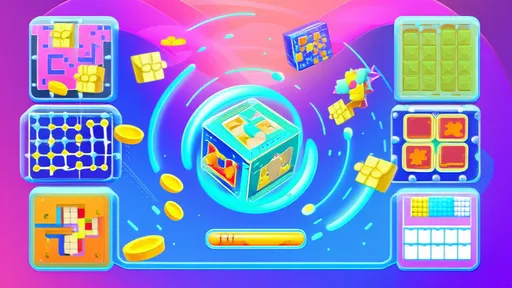
The most significant trend emerging from this period of change is the rise of hybrid-casual games. These titles represent a strategic fusion, artfully marrying the accessible, instant-play appeal of hyper-casual with the progression systems and meta-features traditionally found in more complex mid-core games. A hybrid-casual game might present the player with a familiar and simple core loop—like stacking objects or merging identical items—but then layer on top a compelling reason to return. This is where long-term operaton strategies come into play.
Developers are now integrating features such as character collection, light narrative arcs, customizable avatars or bases, and seasonal events. These elements provide a sense of ownership and investment that pure hyper-casual games lacked. A player is no longer just trying to beat their high score; they are working to unlock a new skin for their character, complete a set of collectibles, or progress through a thematic battle pass. This shift transforms the player's relationship with the game from a casual fling into a more committed hobby, dramatically increasing their lifetime value (LTV).
Monetization strategies have also evolved in tandem with this hybrid approach. While advertising remains a crucial revenue stream, its implementation has become more nuanced and less intrusive. Rewarded videos are strategically placed to offer value, such as double rewards or temporary power-ups, creating a positive value exchange rather than feeling like an interruption. Furthermore, the introduction of deeper gameplay mechanics naturally opens the door for in-app purchases (IAP). Players who are invested in their progression are often willing to spend small amounts to acquire cosmetic items, skip wait times, or gain a competitive edge, creating a healthier and more diversified revenue model for developers.
The entire development process has been reshaped by this new paradigm. The "build, test, and iterate" mentality remains, but the scope of what is being tested has expanded dramatically. Beyond just testing for initial click-through rates and Day 1 retention, developers now rigorously analyze Day 7 and Day 30 retention metrics. They A/B test not only different ad creatives but also various meta-features, event structures, and monetization setups. Data analytics is used to understand what keeps players engaged over weeks and months, informing a continuous live-ops strategy rather than a one-off launch.
This focus on live operations, or live ops, is the backbone of long-term engagement. Successful games are no longer static products; they are live services. Development teams constantly roll out fresh content, including new levels, challenges, limited-time modes, and themed events tied to holidays or pop culture. This constant stream of novelty gives players a compelling reason to reopen the app day after day, fighting off the stagnation that doomed earlier hyper-casual hits. Community management through social media and in-game channels further strengthens this bond, turning a solitary activity into a shared experience.
Looking ahead, the future of the hyper-casual sphere is undoubtedly hybrid. The genre is maturing, moving away from its origins as a disposable content factory towards becoming a pillar of sustainable mobile game development. The winners in this new landscape will be those studios that master the delicate balance: retaining the effortless fun and broad appeal that defined hyper-casual's initial success while skillfully integrating the depth and service-oriented approach required to build a lasting community. This evolution is not the end of hyper-casual but its next, more sophisticated chapter, promising a richer and more engaging experience for players and a more stable future for developers.

By /Aug 26, 2025

By /Aug 26, 2025

By /Aug 26, 2025

By /Aug 26, 2025

By /Aug 26, 2025
By /Aug 26, 2025

By /Aug 26, 2025

By /Aug 26, 2025
By /Aug 26, 2025

By /Aug 26, 2025

By /Aug 26, 2025

By /Aug 26, 2025

By /Aug 26, 2025

By /Aug 26, 2025

By /Aug 26, 2025

By /Aug 26, 2025

By /Aug 26, 2025

By /Aug 26, 2025

By /Aug 26, 2025
By /Aug 26, 2025
