The Modern Revival and Innovation of Retro Chiptune Music

Aug 26, 2025 By

In the ever-evolving landscape of electronic music, few genres have demonstrated as remarkable a resurgence as chiptune, the distinctive sound born from the hardware limitations of early video game consoles and home computers. What began as a functional necessity—composers squeezing melody and rhythm from rudimentary sound chips—has blossomed into a vibrant, global art form. The modern era has not simply witnessed a nostalgic revival of these 8-bit and 16-bit sounds; it has become a hotbed of profound innovation, where artists are pushing the technical and creative boundaries of what chiptune can be.

The roots of chiptune are inextricably linked to the technology of the 1980s. Machines like the Nintendo Entertainment System (NES), Commodore 64, and Game Boy were not designed with professional music production in mind. Their audio processing units (APUs) were severely constrained, typically offering a handful of channels capable of generating simple waveforms like pulse waves, triangle waves, and noise. Composers for games like Super Mario Bros. and The Legend of Zelda became masters of this limited palette, crafting iconic melodies that are etched into the memory of a generation. This was music defined by its constraints, and its charm lay in the ingenious ways composers worked within them.

For a time, as technology advanced and CDs offered streaming audio, the distinctive sound of these chips faded from the mainstream. However, it never truly disappeared. A dedicated underground community of enthusiasts and musicians, often connected through early internet forums and message boards, kept the spirit alive. They traded tracker files, composed new music on original hardware, and developed software emulators like FastTracker and Little Sound DJ (LSDJ) for the Game Boy, which became an unlikely but powerful portable synthesizer. This subculture was the keeper of the flame, preserving the techniques and ethos of chiptune for the revival to come.

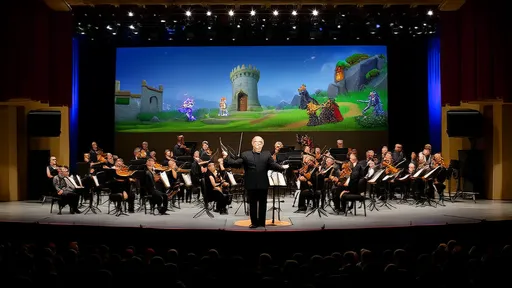
The contemporary revival of chiptune is a multifaceted phenomenon, driven by a powerful wave of nostalgia and a newfound appreciation for its aesthetic. The generation that grew up with these sounds is now creating culture, and their fondness for retro gaming has bled into a passion for its music. This is evident in the massive success of orchestral and chiptune concerts around the world, such as PLAY! A Video Game Symphony and Bit Gen, which celebrate game music history. Furthermore, modern indie game developers frequently employ chiptune and chiptune-inspired soundtracks to evoke a sense of nostalgia, authenticity, or simply to achieve a specific stylistic goal, as heard in critically acclaimed titles like Shovel Knight and Undertale.

Yet, to label this movement as mere nostalgia would be a significant underestimation. The most exciting aspect of modern chiptune is its relentless innovation. Today's artists are not simply replicating the past; they are deconstructing and reimagining it. This innovation occurs on two primary fronts: hardware and composition. On the hardware side, while purists still cherish composing on original, often modified, consoles (a practice known as "hardware chiptune"), there has been an explosion of new tools. Sophisticated software trackers and plugins like Plogue Chipsounds and YMVST accurately emulate classic chips, while modern hardware synthesizers, such as the Twisted Electrons MegaFM (which emulates the Yamaha YM2612 chip from the Sega Genesis), allow for hands-on control and sound design that was impossible on the original machines.

The compositional innovation is even more striking. Modern chiptune artists are seamlessly fusing the raw, square-wave energy of classic chips with a vast array of contemporary genres. It is now common to hear chiptune intertwined with the breakbeats of drum and bass, the aggressive textures of metal, the complex harmonies of jazz, or the thumping four-on-the-floor of house music. Artists like Sabrepulse helped pioneer this "chiptbreak" sound, while others create lush, atmospheric soundscapes that use the chip's limitations to create a unique, lo-fi emotional depth. This genre-blending demonstrates that the chiptune sound is not a relic but a versatile and dynamic instrument in its own right.

The internet has been the absolute cornerstone of this revival and transformation. Platforms like Bandcamp and SoundCloud have given chiptune artists direct access to a global audience, allowing niche communities to thrive. Online labels such as Ubiktune and Cheapbeats curate and release music from artists worldwide, fostering a sense of community and shared purpose. YouTube and Twitch serve as stages for live-streamed performances and tutorials, where artists break down their creative process, further democratizing knowledge and inspiring newcomers. This interconnectedness has accelerated the exchange of ideas, leading to rapid evolution and diversification within the scene.

Looking toward the future, the trajectory of chiptune points toward even greater integration and experimentation. We are already seeing the emergence of "hybrid" artists for whom the chiptune aesthetic is just one color on a much broader palette. The lines between chiptune, synthwave, Vaporwave, and other electronic genres continue to blur. Furthermore, the ethos of chiptune—maximizing creativity within limitations—resonates deeply in an era of increasingly complex and sometimes overwhelming digital audio workstations. There is a beauty and a challenge in creating something profound from something simple. As technology continues to evolve, perhaps with new forms of constrained, purpose-built hardware, the core spirit of chiptune will undoubtedly find new forms of expression.

In conclusion, the modern story of chiptune is not one of simple revival but of remarkable reinvention. It has successfully transcended its origins as a video game novelty to establish itself as a legitimate and innovative musical genre. Powered by a blend of heartfelt nostalgia and a fiercely forward-looking creative drive, the community continues to explore the vast potential hidden within those simple waveforms. The bleeps and bloops of the past are no longer just memories; they are the building blocks for the future of electronic music, proving that true artistry lies not in the abundance of resources, but in the imagination of the creator.

Recommend Posts
Game

Exploring the Business Models for Mobile Cloud Gaming: Subscription, Pay-per-Play, or Freemium with Ads?

By /Aug 26, 2025

The landscape of mobile cloud gaming is rapidly evolving, and at the heart of this transformation lies a critical question: which business model will dominate the industry? As companies experiment with various monetization strategies, three primary approaches have emerged—subscription-based services, pay-per-hour models, and free-to-play supported by advertisements. Each model carries distinct implications for developers, players, and the broader ecosystem, making the exploration of their viability not just relevant but essential for stakeholders aiming to thrive in this competitive space.
Game

New Applications of AR Games: From Outdoor Adventures to Indoor Puzzle Solving

By /Aug 26, 2025

Augmented reality gaming has evolved far beyond its initial novelty phase, now permeating diverse environments with applications that challenge our very perception of play and interaction. What began as a simple overlay of digital creatures in public parks has blossomed into a sophisticated ecosystem of experiences, each tailored to exploit the unique characteristics of its setting. The journey from chasing virtual monsters outdoors to unraveling intricate puzzles indoors marks a significant maturation of the technology, reflecting both technical advancements and a deeper understanding of user engagement.
Game

Exclusive Experience of Foldable Screen Gaming Ecology: Multitasking, Tilt Mode, and Screen Adaptation

By /Aug 26, 2025

The gaming landscape is undergoing a transformative shift, and at the heart of this evolution lies an unexpected champion: the foldable smartphone. No longer a mere novelty, these devices are rapidly carving out a unique niche, offering a gaming ecosystem defined by versatility and immersion that traditional slabs simply cannot match. The conversation has moved beyond just the durability of the hinge or the crease in the screen; it's now centered on the genuinely exclusive experiences that the form factor enables. Developers and hardware manufacturers are beginning to tap into this potential, crafting interactions that feel native to the foldable's unique canvas.
Game

Mobile Phone Cooling Technology Popularization: Vapor Chambers, Graphene, and Cooling Back Clips' Actual Effects

By /Aug 26, 2025

As smartphones become increasingly powerful, managing the heat they generate has evolved into a critical engineering challenge. From casual gaming to intensive multitasking, modern devices push the limits of performance, often resulting in significant thermal buildup. Overheating not only causes discomfort during use but can also lead to performance throttling, reduced battery life, and in extreme cases, permanent hardware damage. To combat these issues, manufacturers have developed and implemented various cooling technologies, each with distinct mechanisms and effectiveness. This article explores three prominent solutions: vapor chambers, graphene films, and external cooling accessories, examining how they function and their real-world impact on thermal management.
Game

Innovations in Mobile Ad Monetization: Design Secrets of Playable Ads

By /Aug 26, 2025

In the ever-evolving landscape of mobile advertising, playable ads have emerged as a revolutionary format that bridges the gap between user engagement and monetization. Unlike traditional static or video ads, playable ads offer an interactive experience, allowing users to sample a game or app before downloading it. This hands-on approach not only captivates attention but also significantly boosts conversion rates by providing a tangible preview of the product. As mobile users become increasingly discerning and ad-blind, the need for innovative ad formats that respect user intelligence while delivering value has never been more critical. Playable ads answer this call by transforming advertising from an interruption into an experience.
Game

Subscription Model Dilemmas in Mobile Games: How to Provide Continuous Value for Payment?

By /Aug 26, 2025

The mobile gaming landscape has undergone a seismic shift over the past decade, with the subscription model emerging as a formidable, yet contentious, revenue stream. Unlike the straightforward transactional nature of in-app purchases or the upfront cost of premium titles, subscriptions promise an ongoing relationship between the player and the developer. This relationship, however, is fraught with challenges unique to the fast-paced, often fickle world of mobile gaming. The central question plaguing developers and publishers is no longer just how to acquire a subscriber, but how to perpetually justify that monthly or annual fee in an environment saturated with free alternatives.
Game

Technical Challenges of Open-World Mobile Games: Striking a Balance Between Performance and Graphics Quality

By /Aug 26, 2025

The mobile gaming landscape has undergone a seismic shift with the advent of open-world titles, pushing the very limits of what was once thought possible on handheld devices. These vast, explorable digital realms promise console-like immersion in the palm of your hand, but this ambition comes at a tremendous technical cost. Developers are locked in a constant, high-stakes battle, a delicate dance on a razor's edge between delivering breathtaking visual fidelity and ensuring buttery-smooth performance. This is the central, defining challenge of the modern mobile open world.
Game

Technical Implementation of Cross-Platform Online Connectivity on Mobile Devices and Network Latency Optimization

By /Aug 26, 2025

As the gaming industry continues its relentless expansion into the mobile domain, the demand for seamless cross-platform multiplayer experiences has surged to the forefront of technological challenges. The vision of a unified gaming ecosystem, where players on iOS, Android, and even web-based platforms can compete and collaborate in real-time, is no longer a distant fantasy but an attainable reality. However, the path to achieving this is fraught with technical hurdles, chief among them being the intricate dance of network synchronization and the ever-present specter of latency.
Game

The Evolution of Hyper-Casual Games: Hybrid Gameplay and Long-Term Operations

By /Aug 26, 2025

The landscape of mobile gaming is undergoing a profound transformation, and at the heart of this shift lies the evolution of the hyper-casual genre. Once the undisputed king of quick downloads and instant gameplay, the hyper-casual model, built on simplicity and aggressive advertising, is facing significant headwinds. Market saturation and rising user acquisition costs are compelling developers to rethink their strategies. The industry is now pivoting towards a more sophisticated and sustainable approach, blending the addictive core of hyper-casual with deeper mechanics and a renewed focus on long-term player engagement.
Game

Optimizing the Desktop Version" Experience of Mobile Games: Keyboard-Mouse Adaptation, Interface Restructuring, and Performance Enhancement

By /Aug 26, 2025

The gaming landscape is undergoing a subtle but significant transformation, and nowhere is this more evident than in the quiet revolution of mobile game desktop clients. For years, the concept of a "desktop version" of a popular mobile title often meant a simple emulator wrapper—a functional but clunky port that rarely felt native to the PC environment. Players tolerated these experiences, but a new standard is emerging. Driven by a demand for deeper immersion and competitive integrity, developers are now investing seriously in creating bespoke desktop experiences that stand on their own merit. This isn't just about playing a phone game on a bigger screen; it's about re-engineering the entire experience from the ground up for a powerful machine.
Game

Music Copyright Clearance: Process and Costs for Using Pop Songs in Games

By /Aug 26, 2025

The pulsating beat of a chart-topping single can transform a gaming experience, elevating emotional stakes and immersing players in a meticulously crafted digital universe. Yet behind the seamless integration of popular music into video games lies a complex and often daunting process of music licensing—a legal and financial labyrinth that developers must navigate with precision and foresight. Securing the rights to use a well-known track involves much more than writing a check; it demands a thorough understanding of copyright law, negotiation skills, and strategic budgeting.
Game

Ecology of Ambient Sound Effects: Crafting a Vibrant Acoustic World

By /Aug 26, 2025

In the realm of audio design, the concept of ecological soundscapes has emerged as a transformative approach to creating immersive and dynamic auditory environments. Rather than treating sound as mere background noise or isolated effects, this perspective views soundscapes as living, breathing ecosystems where every element interacts and contributes to a cohesive whole. By drawing inspiration from natural environments and the principles of ecology, sound designers and artists can craft experiences that feel authentic, responsive, and deeply engaging.
Game

Audio Accessibility Feature Design: Providing Visual Alternatives to Sound for Deaf and Hard-of-Hearing Players

By /Aug 26, 2025

In the ever-evolving landscape of video games, accessibility has transitioned from an afterthought to a core component of inclusive design. Among the various challenges faced by players with disabilities, hearing impairment presents unique obstacles that can significantly impact gameplay experience. Traditional audio cues—footsteps signaling an approaching enemy, environmental sounds hinting at hidden paths, or dialogue conveying critical narrative information—are often inaccessible to those who are deaf or hard of hearing. This has spurred developers to innovate, creating robust visual alternatives that not only accommodate but empower hearing-impaired players.
Game

The Modern Revival and Innovation of Retro Chiptune Music

By /Aug 26, 2025

In the ever-evolving landscape of electronic music, few genres have demonstrated as remarkable a resurgence as chiptune, the distinctive sound born from the hardware limitations of early video game consoles and home computers. What began as a functional necessity—composers squeezing melody and rhythm from rudimentary sound chips—has blossomed into a vibrant, global art form. The modern era has not simply witnessed a nostalgic revival of these 8-bit and 16-bit sounds; it has become a hotbed of profound innovation, where artists are pushing the technical and creative boundaries of what chiptune can be.
Game

Sound Exploration" Play Design: How to Let Players "See" the World with Their Ears?

By /Aug 26, 2025

In an era dominated by visual media and screen-based interactions, a quiet revolution is brewing in the gaming world—one that asks players to close their eyes and truly listen. Sound-based exploration games are challenging conventional design paradigms, creating immersive experiences where auditory cues replace visual information as the primary navigational tool. This isn't merely about good sound design; it's about fundamentally reimagining how players perceive and interact with virtual environments.
Game

From Games to Concerts: The Live Performance Industry of Video Game Soundtracks (OST)

By /Aug 26, 2025

From the dimly lit bedrooms of gamers to the grand concert halls of the world, a remarkable cultural migration is underway. The once niche appreciation for video game music has blossomed into a full-fledged, global performance phenomenon. The live orchestral performance of game soundtracks, or Original Soundtracks (OSTs), is no longer a novelty but a robust and rapidly expanding sector of the entertainment industry, connecting generations of fans through a powerful, shared auditory experience.
Game

Behind the Scenes of Game Voice Acting: How Directors, Actors, and Technicians Collaborate

By /Aug 26, 2025

Behind every immersive gaming experience lies an intricate symphony of voices that brings digital worlds to life. While players may only hear the final polished performance, the creation of game voice acting represents a fascinating collaborative dance between directors, actors, and technical teams. This complex process transforms written words on a page into living, breathing characters that resonate with audiences worldwide.
Game

3D Audio Technology (Such as Dolby Atmos) in Gaming: Practical Applications and Limitations

By /Aug 26, 2025

In the ever-evolving landscape of gaming, audio has long been the unsung hero, often playing second fiddle to the visual spectacle on screen. For decades, the primary goal was simply to have clear sound effects and a compelling soundtrack. However, the advent of 3D audio technologies, most notably Dolby Atmos for gaming, has fundamentally shifted this paradigm, pushing spatial sound from a background feature to a frontline gameplay mechanic. This isn't just about hearing a monster; it's about knowing, with unnerving precision, that it's crawling on the ceiling directly above you, its claws scraping against the metal ductwork. The implementation of these technologies marks a significant leap towards a more immersive and, crucially, a more tactically rich gaming experience.
Game

Branding Game Sounds: Crafting Unforgettable Auditory Logos

By /Aug 26, 2025

In the ever-evolving landscape of game development, where visual fidelity often steals the spotlight, the power of sound is an unsung hero. It is the subtle whisper in the wind, the thunderous roar of an explosion, and the delicate chime of a discovery that truly breathes life into a digital world. Yet, beyond mere ambiance and feedback, sound possesses a profound capacity for brand building. An auditory identity, much like a visual logo or a specific color palette, can become an indelible part of a game's soul, a sonic signature that players carry with them long after they've put down the controller. This is the art and science of sonic branding in gaming—forging an unforgettable auditory identity.
Game

Dynamic Interactive Music System Design: Taking Hades" as an Example

By /Aug 26, 2025

In the ever-evolving landscape of video game design, the integration of interactive music systems has emerged as a transformative element, reshaping how players experience and engage with virtual worlds. Among the standout examples of this innovation is Supergiant Games' critically acclaimed title, Hades. This rogue-like dungeon crawler not only captivates with its rich narrative and fluid combat but also sets a new benchmark for dynamic audio design. The game’s music, composed by Darren Korb, is not merely a backdrop; it is a living, breathing component of the gameplay, responding to player actions, environmental shifts, and narrative progression in real-time. This deep synergy between audio and interactivity elevates Hades from a great game to an immersive masterpiece, demonstrating the profound impact of well-executed interactive music systems.